
THANKS FOR ENJOYING THIS FREE PREVIEW! Please choose an option to keep watching. Loading the player… Instructions: Watch the entire video, then take the quiz. The video player will not allow you to fast forward to the end. You must complete the quiz to earn a certificate of completion and continuing education credit. You can …Continue Reading
Sara Brown addresses various aspects of managing assignments, including content and terminology preparation, team etiquette, ethical considerations and coping with difficult topics. The insight is relevant not only to conference interpreting, but to community assignments such as health education classes, insurance benefits presentations, school meetings and more.
Michelle Scott, a Registered Nurse and interpreter trainer, discusses ways in which the medical interpreting profession can “catch up” with other healthcare professions.
Across the age spectrum, from infants to teens, nurse practitioner Hoda Shawky discusses her communication strategies with patients and parents. Immunizations and common pediatric health problems are reviewed.

Originally a medical conference interpreter in Brazil, trainer Marcelle Castro describes her academic research about using technology to train interpreters, often internationally. Her experience is applicable to the field of medical interpreter training, as she describes considerations for learning styles, trainer adaptations and various resources (software, hardware and web based).
Interpreters can improve facilitation of communication for medical histories by understanding providers’ goals, communication styles, and different types of histories. Concepts presented by Michelle Scott, RN include the S.O.A.P. process, pain assessment, the 5 components of a medical history, communication techniques and styles, and patient reactions.
This interview with Shane Feldman, RID Executive Director, explores topics related to providing adequate healthcare services to Deaf patients, including an explanation ASL certification and a comparison of live versus video remote interpreters.
Registered Dietician Debra Hook explains special considerations for communicating with patients when providing nutrition counseling in outpatient settings. Particular attention is given to the culture brokering role of the medical interpreter with regard to foods and their preparation. The corresponding online “Nutrition” medical glossary contains 110 terms.
In this interview, Registered Nurse Ron Coronado describes the emergency department setting from triage to discharge. Practical tips for medical interpreters are provided for good communication, preparation, and managing dilemmas.
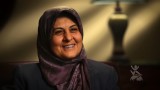
In this interview, Dr. Maryam Rahimi describes the role of an internal medicine physician, common chronic conditions encountered in outpatient clinical settings (diabetes, hypertension and heart disease) and practical tips for interpreters.
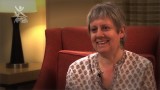
This interview with Lynne Carter, Head of Equality and Diversity at NHS Bradford and Airedale, provides an introduction to health disparities in the United Kingdom, as well as strategies to address language accommodation, allowing the audience to compare opportunities within the U.S. healthcare system.
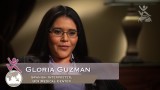
Gloria Guzman, WA-DSHS certified medical interpreter, shares personal experiences as a professional medical interpreter to highlight cultural and linguistic dilemmas that are common among Spanish interpreters.
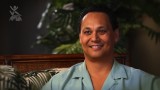
Ron Coronado, RN discusses the healthcare provider’s approach to taking sexual histories and providing sex education. Sexually transmitted diseases, social stigma and interpreting ethics are addressed. The corresponding glossary contains over 60 medical terms.
As a professional nurse and medical interpreter, author Ineke Crezee describes results of research exploring vicarious trauma experienced by interpreters working with refugees. Concepts are applicable to interpreters working with refugees in any country.
THANKS FOR ENJOYING THIS FREE PREVIEW! Get unlimited access to all videos, glossaries and your Learner Log with Professional Membership: $14.95 per month With Basic Membership, finish watching this video and receive a certificate of completion by email: $11.00 per view Loading the player… Need to take a break? We´ll save your place! Video …Continue Reading
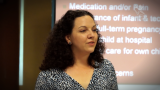
This presentation by Michelle Scott, RN explores the psychosocial dynamics of interpreting for families in the neonatal intensive care unit (NICU). Terminology related to health professions and acronyms is covered.
In this interview, Registered Dietician Debra Hook explains special considerations for communicating with patients when providing nutrition education to diabetics in inpatient and outpatient settings. The corresponding online “Diabetes” glossary has 109 valuable terms!
This video with physician and researcher Juan Gutierrez-Sanin explores an emerging, research-based model for patient navigators, by training medical interpreters using a specialized curriculum.
From refugee camps to beyond resettlement, this interview with social worker Kathleen To explores psychosocial dynamics of refugees and techniques to assist interpreters in facilitating communication for social service encounters.
This video with researcher Maria Moreno, MPH explores ways in which health disparities in the United States can be minimized through adequate language accommodation mandates and practices.
© Copyright 2013 - 2026 Voices For Health, Inc. All Rights Reserved.