Sara Brown addresses various aspects of managing assignments, including content and terminology preparation, team etiquette, ethical considerations and coping with difficult topics. The insight is relevant not only to conference interpreting, but to community assignments such as health education classes, insurance benefits presentations, school meetings and more.

Professional conferences offer an excellent opportunity to learn and network! It’s an exciting time to interact with old friends and make new ones. Presenters come from near and far to share pearls of wisdom. Exhibitors provide glimpses of new solutions and job opportunities. As a freelance interpreter or translator, how can you prepare in advance …Continue Reading

This interview with Shane Feldman, RID Executive Director, explores topics related to providing adequate healthcare services to Deaf patients, including an explanation ASL certification and a comparison of live versus video remote interpreters.

Registered Dietician Debra Hook explains special considerations for communicating with patients when providing nutrition counseling in outpatient settings. Particular attention is given to the culture brokering role of the medical interpreter with regard to foods and their preparation. The corresponding online “Nutrition” medical glossary contains 110 terms.

In this interview, Registered Nurse Ron Coronado describes the emergency department setting from triage to discharge. Practical tips for medical interpreters are provided for good communication, preparation, and managing dilemmas.

In this interview, Dr. Maryam Rahimi describes the role of an internal medicine physician, common chronic conditions encountered in outpatient clinical settings (diabetes, hypertension and heart disease) and practical tips for interpreters.

Ron Coronado, RN discusses the healthcare provider’s approach to taking sexual histories and providing sex education. Sexually transmitted diseases, social stigma and interpreting ethics are addressed. The corresponding glossary contains over 60 medical terms.
“Send a Dinka interpreter right away. I don’t care if they’re trained, I just need a warm body!” Believe it or not, this was an actual request to our language agency by a hospital nurse administrator ten years ago. If you are a language agency owner or an interpreting services coordinator who has cringed at …Continue Reading
Yes, I’ve heard the reasons given by interpreters for not wanting or getting training, whether we’re talking core concepts or continuing education. Let me get this out of my system now: “Blah, blah, blah…” Here are a few well-known excuses, as well as my responses: “Medical interpreter training is too expensive.” – Medical interpreters typically …Continue Reading
“I’ve been interpreting in hospitals for 20 years. I don’t need training!” As the owner of a language agency, I can’t tell you how many times I’ve heard that claim. Perhaps you have even said it yourself. For me, that statement is a RED FLAG: an interpreter with this attitude is at the top of …Continue Reading
As a professional nurse and medical interpreter, author Ineke Crezee describes results of research exploring vicarious trauma experienced by interpreters working with refugees. Concepts are applicable to interpreters working with refugees in any country.
In this interview, Registered Dietician Debra Hook explains special considerations for communicating with patients when providing nutrition education to diabetics in inpatient and outpatient settings. The corresponding online “Diabetes” glossary has 109 valuable terms!
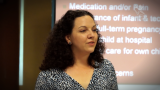
This presentation by Michelle Scott, RN explores the psychosocial dynamics of interpreting for families in the neonatal intensive care unit (NICU). Terminology related to health professions and acronyms is covered.

This video with physician and researcher Juan Gutierrez-Sanin explores an emerging, research-based model for patient navigators, by training medical interpreters using a specialized curriculum.
This interview with professor and interpreter Katharine Allen, Co-President of InterpretAmerica, provides an overview of technology that is currently available in the medical interpreting industry for service provision and assignment scheduling, including suggestions for best practices.

Physician Lucia Roncalli describes the delicate nature of medical exams for asylum seekers and the ways in which the interpreter can best support communication. Vicarious trauma, both during and following the encounter, and self-care are discussed. The corresponding glossary contains 25 terms.

During this interview with physician Lucia Roncalli, normal physiological responses to psychological trauma are explained within the context of communicating with patients during a medical encounter. An actual patient/provider scenario allows the viewer to see therapy in action, while also providing an opportunity to practice interpreting the encounter.
This second part of the interview with licensed clinical psychologist Susan Potts covers the goals of counseling in an outpatient setting, as well as ways that interpreters can prepare for facilitating communication in emotionally-charged encounters. The corresponding glossary contains over 30 mental health terms.

This first part of the interview with Susan Potts, Licensed Clinical Psychologist, covers the goals of counseling in an outpatient setting, as well as ways that interpreters can prepare for facilitating communication in emotionally-charged encounters. The corresponding medical glossary contains over 30 mental health terms.

This interview with Rochelle Russell, Registered Speech Therapist, explores the dynamics of communicating with children in speech and language therapy encounters, with particular focus on the challenges that arise when working with different languages and cultures.
© Copyright 2013 - 2026 Voices For Health, Inc. All Rights Reserved.